



Park Your Real Estate License vs. Letting It Expire: The Real Cost Comparison

The renewal notice lands ninety days out, and for a lot of California agents that's the moment the decision gets made by default. Deals are slow. The January board invoice is still a fresh wound. Letting the license lapse starts to feel like the disciplined choice, the one a person makes when they're being honest about their pipeline. Before you make that call, run the actual numbers on parking real estate licenses vs expire, because the two roads cost wildly different amounts once you count what it takes to get back. Parking keeps your license active under a broker without the association bill attached. Expiring starts a clock you don't control. Our California license parking program was built for this exact fork.
What parking actually means
Parking isn't a status the Department of Real Estate recognizes. There's no box on any form. What it describes is a practical arrangement: your license stays active and stays hung with an employing broker, but that broker doesn't require you to join the local association, the state association, the national one, or the MLS.
Your license reads "Licensed" in the DRE's public database. You can accept referral fees. You can do commercial work. You can sell your own property and collect a commission. What you give up is MLS access and the Realtor designation, which for an agent doing a handful of deals a year is mostly a subscription they were paying for out of habit.
The distinction that matters for this comparison: a parked license is an active license. It hasn't paused. It's still working, just cheaply.
Does a real estate license expire in California? Yes, on a four-year clock
California issues salesperson and broker licenses for a four-year term, and the expiration date is printed on the license itself. The DRE emails a courtesy reminder roughly ninety days out, but non-receipt of that email doesn't excuse anybody. The responsibility sits with you.
You can file your renewal up to ninety days early through eLicensing, and you'll need 45 hours of approved continuing education completed first. Renew on time and Business and Professions Code Section 10156.2 lets you keep operating past the printed expiration date while the DRE processes the paperwork.
Miss the date and that protection vanishes immediately. This is where agents get hurt, and it happens most often to people who weren't planning to work anyway. The four-year clock doesn't care whether the market was soft in the Inland Empire that year or whether you took eighteen months off after a job change in Irvine. It runs regardless.
The two-year window, and the cliff at the end of it
An expired California license isn't dead on arrival. The DRE allows a late renewal period of two years running from your expiration date. Complete your CE, file the application, pay the elevated fee, and you're back.
Two things about that window get consistently misunderstood.
First, you cannot perform any activity requiring a license for the entire time you sit in it. Not a listing, not a showing, and critically, not a referral. That last one surprises people. Agents assume referral income survives a lapse because it feels passive. It doesn't. A salesperson license only functions when an employing broker holds it, and an expired license holds nothing. Send a client to a colleague in Torrance during your lapse and you have no legal claim to a cent of that commission.
Second, the window is absolute. Reach twenty-four months and one day past expiration without filing, and your renewal right is forfeited. Not extended, not appealed. At that point the DRE's position is that you're a new applicant. You retake the state examination, satisfy current education requirements, submit a fresh application, and because your license has expired more than two years, you pay for Live Scan fingerprinting again.
You also lose four years of seniority in a state where a California real estate brokers license requires documented years of licensed salesperson experience to qualify for in the first place. If you ever intended to move up to broker, a lapse past twenty-four months resets that runway to zero.
What expiring actually costs

The sticker price is the smallest part. Under the DRE's published schedule, an on-time salesperson renewal runs $350 and a late renewal runs $525. For a real estate broker license in California the figures are higher: $450 on time against $675 late. Confirm current amounts on dre.ca.gov before you file, since fee schedules change.
So the late penalty alone is $175 for a salesperson and $225 for a broker. Annoying, not fatal.
The expensive part is everything else:
Your CE doesn't survive indefinitely. Course credit expires four years from the completion date, so a long lapse means paying for the same 45 hours twice.
Referral income during the gap is zero, and it isn't recoverable. One closed referral on a median-priced San Diego County home at a standard referral percentage will typically exceed several years of parking fees. Miss two of those and the comparison stops being close.
Past the cliff, add the exam fee, the retake risk, the original license application fee, LiveScan, and current pre-license education requirements. Plus the months it takes to schedule and pass an exam you last sat years ago.
And the intangible: a client who calls during your lapse doesn't wait. They call somebody else, and they call that person next time too.
What parking costs by comparison
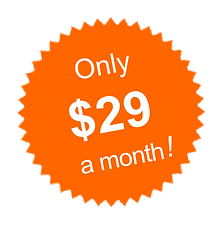
A flat monthly fee, no association dues, no MLS bill, no E&O, no desk fee. CURB runs $29 a month. Across a full four-year license term that's $1,392, and every month of it your license is live and earning-capable.
Set that against the alternative honestly. If you park for four years, do nothing at all, and never send a single referral, you've spent $1,392 to preserve an asset that would otherwise have cost you an exam and a fresh application to rebuild. Send two referrals across those four years and the program has usually paid for itself several times over.
Compare it to staying fully boarded and the gap is starker. Bay Area agents under SFAR, SILVAR, or Bay East frequently stack local dues, CAR, NAR, and MLS into a figure between $2,500 and $4,000 annually. Los Angeles and Orange County agents pay somewhat less but not dramatically so. We've broken that stack down in detail in our post on what it really costs to keep a California license active.
Where you're licensed changes the math
Geography drives this decision more than agents expect, because dues aren't uniform across the state.
Along the coast, from the South Bay through Orange County and down the 5 into San Diego, the boards are expensive and the deal sizes are large enough that a single referral covers years of parking. Agents in the San Fernando Valley and the 101 corridor land in the same position. If you're in this footprint and you're between brokerages, expiring is almost always the more expensive choice on a four-year view.
Inland is a different picture. Riverside and San Bernardino agents working the 15 and the 91 often carry lower board costs but also see longer stretches between closings, and those quiet stretches are exactly when a renewal date sneaks past. The lapse risk is higher here, not lower.
Sacramento and the Central Valley along the 99 sit somewhere between, and we've covered that market specifically in our Sacramento and Central Valley license parking guide.
Bay Area agents dealing with the state's steepest board bills can read the regional breakdown in our Bay Area license parking overview.
Who should genuinely let it go
Not everybody should park, and pretending otherwise would be dishonest.
If you left real estate for good, have no intention of returning, hold no relationships that would ever produce a referral, and have moved into a career with no adjacency to property, then a lapse is a rational choice. Stop paying for an asset you'll never use.
Everybody else should think harder.
If you still know buyers and sellers, if you work in lending, escrow, construction, insurance, or property management, if you own investment property, or if you might come back when rates settle, the license is worth more parked than surrendered. And if you're carrying a California broker license specifically, the case is stronger still, because rebuilding one takes qualifying experience you can't shortcut.
Make the call before the date passes

The decision gets much harder after expiration and much more expensive after twenty-four months. If your renewal is inside a year out, this is the moment to price both paths properly.
Our team can tell you in one conversation whether parking makes financial sense for your situation, including a straight answer if it doesn't. Look at how the license parking program works, or get in touch with CURB and we'll walk your specific renewal date and license type with you.
FAQs
Can I renew my real estate license after it expires in California?
Yes, within two years of the expiration date. You'll complete your 45 hours of CE, file through eLicensing or by mail, and pay the late renewal fee rather than the on-time one. The catch is that you can't perform any licensed activity, including collecting referral fees, until the renewal is actually processed.
When does a real estate license expire in California?
Four years from the date it was issued, with the exact date printed on your license and viewable in the DRE's public database. The DRE emails a reminder about ninety days out, but that notice is a courtesy and missing it doesn't extend anything.
What happens if my license has expired for more than two years?
Your renewal right is forfeited and the DRE will not accept a late renewal. Getting back in means meeting current education requirements, passing the state exam again, submitting a new application, and paying for Live Scan fingerprinting. For anyone holding a real estate brokers license California recognizes, that reset also wipes out qualifying experience toward the broker level.
Is there a way to keep a real estate license free of fees?
No, and any service claiming otherwise is worth a hard look. The DRE charges a renewal fee every four years and CE costs money regardless of who holds your license. What you can eliminate are the optional costs: NAR, CAR, local board dues, and MLS access, which together usually dwarf the mandatory ones.
How do I know whether parking is worth it for my situation?
Compare your realistic referral activity over the next four years against the flat monthly cost, then weigh both against what re-entry would cost if you lapse past the two-year mark. If you'd like someone to run those numbers against your actual renewal date and license type, contact CURB and we'll give you a straight answer, including telling you if parking isn't the right fit.


Comments